I first began playing the violin when I was ten. It was my grandfather’s violin, fiddle, actually. He lost his arm in a train accident so couldn’t play anymore. I remember his pulling it out from under the bed in the farm’s guest bedroom and handing it to me. All I had to do to earn it was learn to play “The Irish Washerwoman.” I played that song for him for years.
Where am I going with this? Just a brief background on why I was intrigued by an apartment exchange offer in the town of Cremona, Italy. Why wouldn’t I want to do that? Of course, that’s my usual response to an offer of a visit to Italy but Cremona is particularly special. It is the birthplace of the modern violin, the home of the brilliant luthiers Amati and Stradivari. Still home to over one hundred violin makers and two stupendous collections of priceless instruments.
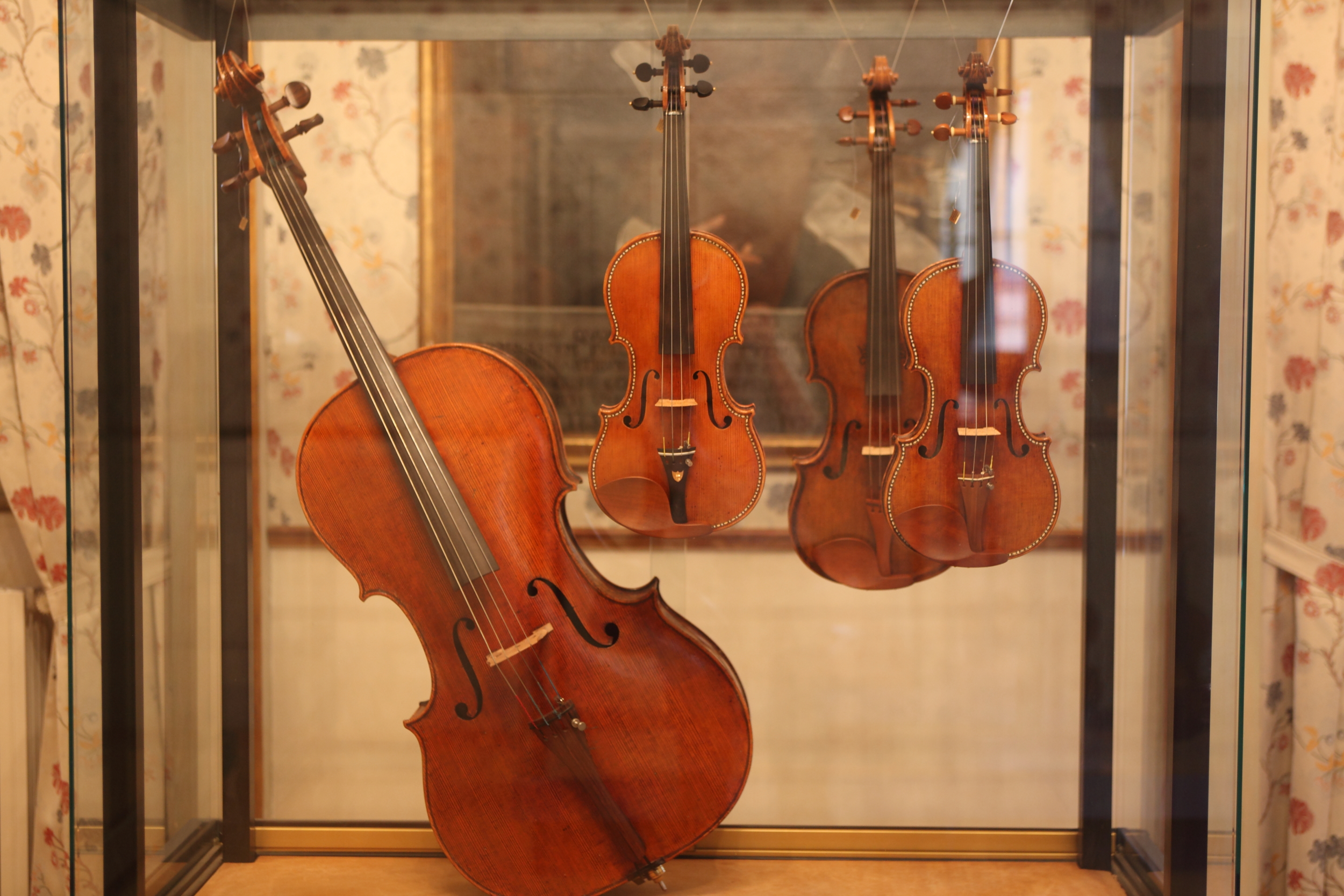
The Civic Collection is housed in the beautiful Palazzo Comunale,and contains violins, a viola and a cello ranging in creation dates from 1566 to 1941. The Stradivari Museum is found in the Civic Museum Ala Ponzone, and includes not only another wonderful collection of instruments, but also includes tools, patterns, molds and other paraphernalia used in making stringed instruments, some used by Stradivari.
I know this will seem melodramatic to those who have never picked up a violin, drawn a bow over the strings, made that first attempt at playing “At Pierrot’s Door.” But when I stood alone with the Civic Collection, the room empty except for the chattering guards, in the company of twelve of the world’s most famous instruments, I cried.
These instruments are still played, every day. A stringed instrument needs to be played. Playing keeps it alive, vibrant. These instruments are still very much alive. There are only two men in Cremona who are allowed to play them on a regular basis. They alternate days and, if you are lucky, you can attend a brief but glorious concert in the large hall outside the collection room. Up close, if you are early. Bach on Il Cremonese, Stradivari, circa 1715, is climbing to the top of the mountain.
 ontheroadwithjp
Wonderful start!
amazing