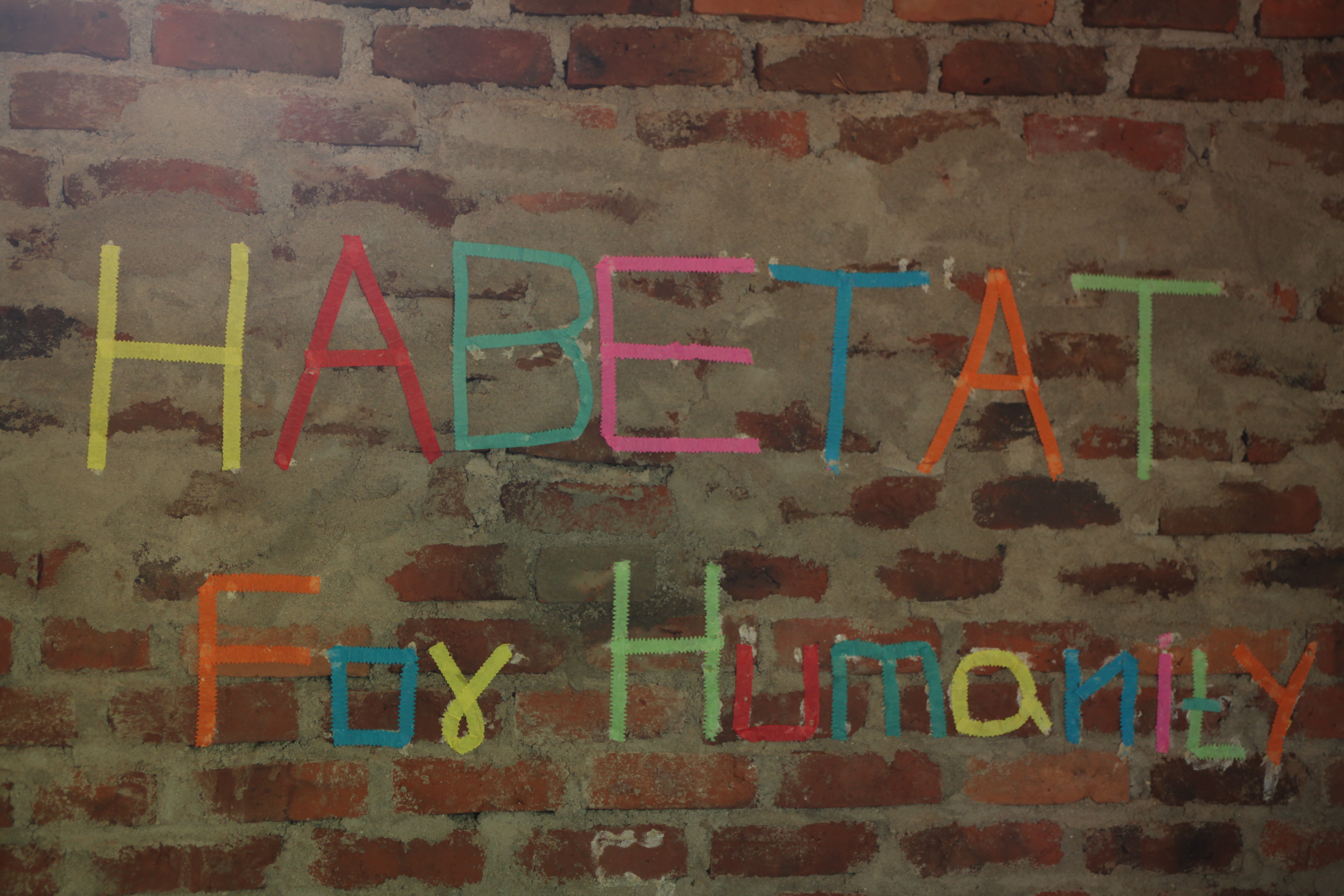
I have never laid brick before. Everything from laying rebar, to waterproofing, installing sheet rock, spackling and painting, but never brick. I’m not a carpenter or builder but, after a few volunteer days with Habitat for Humanity, I was ready to go international and found that they had opportunities to help locals build houses. Why wouldn’t I want to do that? I love to travel and working in a community was appealing. As an extension of a trip to Indonesia, Sri Lanka became the destination. After all, I was in the area, generally speaking.
What does it mean to build a house in Sri Lanka? It is a community affair. The village was tiny. Really just a few families living in proximity to one another, no stores, malls, markets. A long, rough ride in a van from our accommodations.
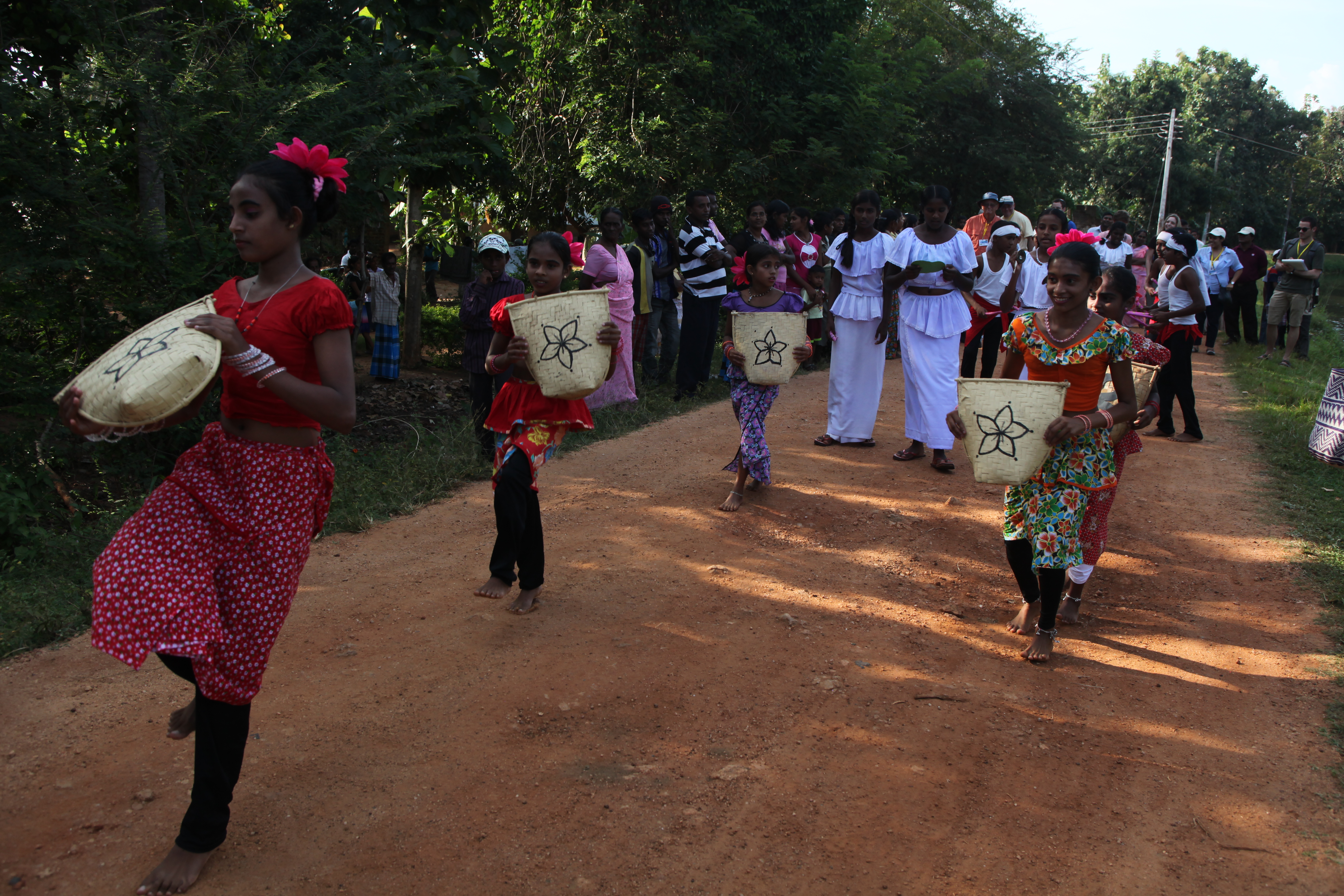
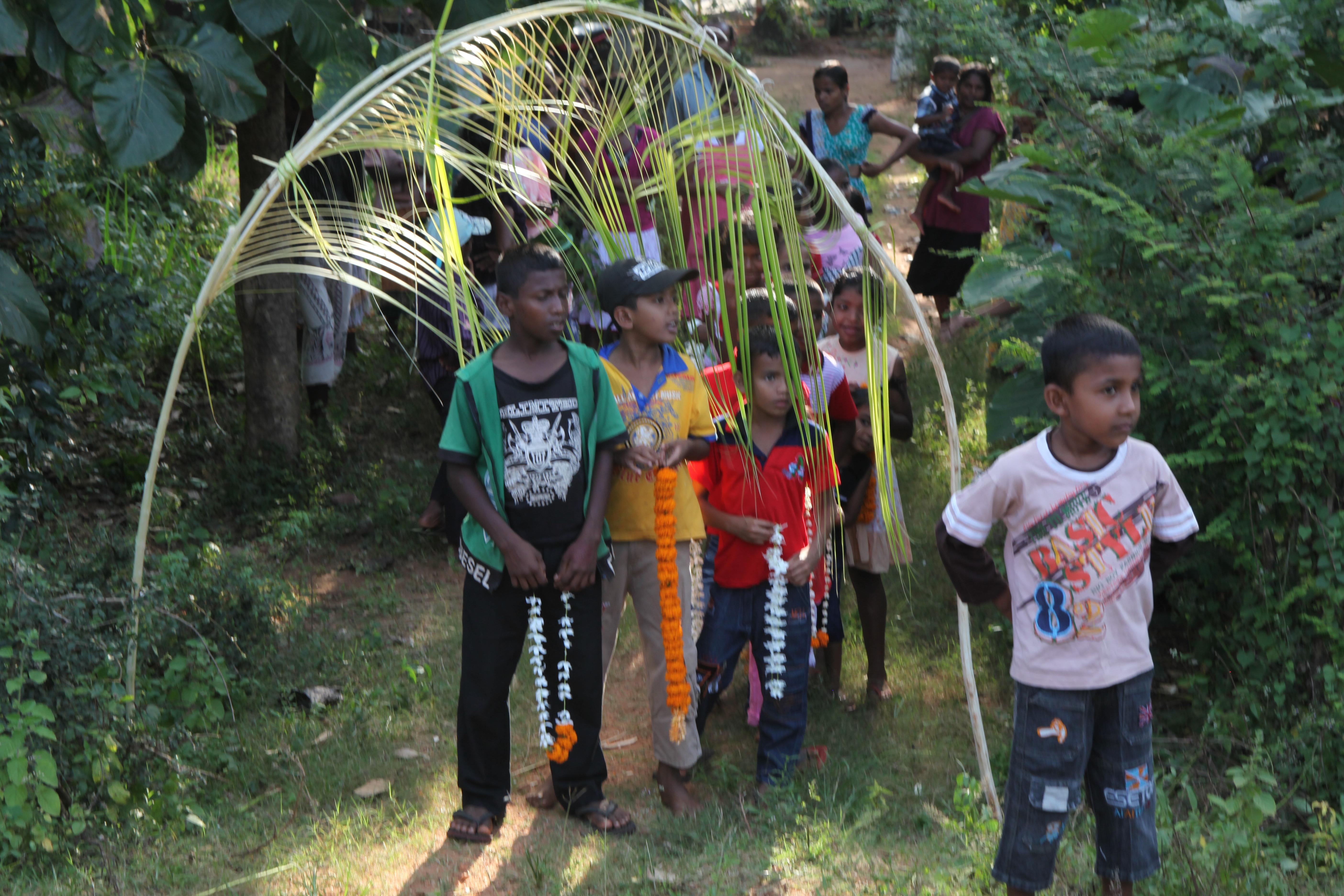
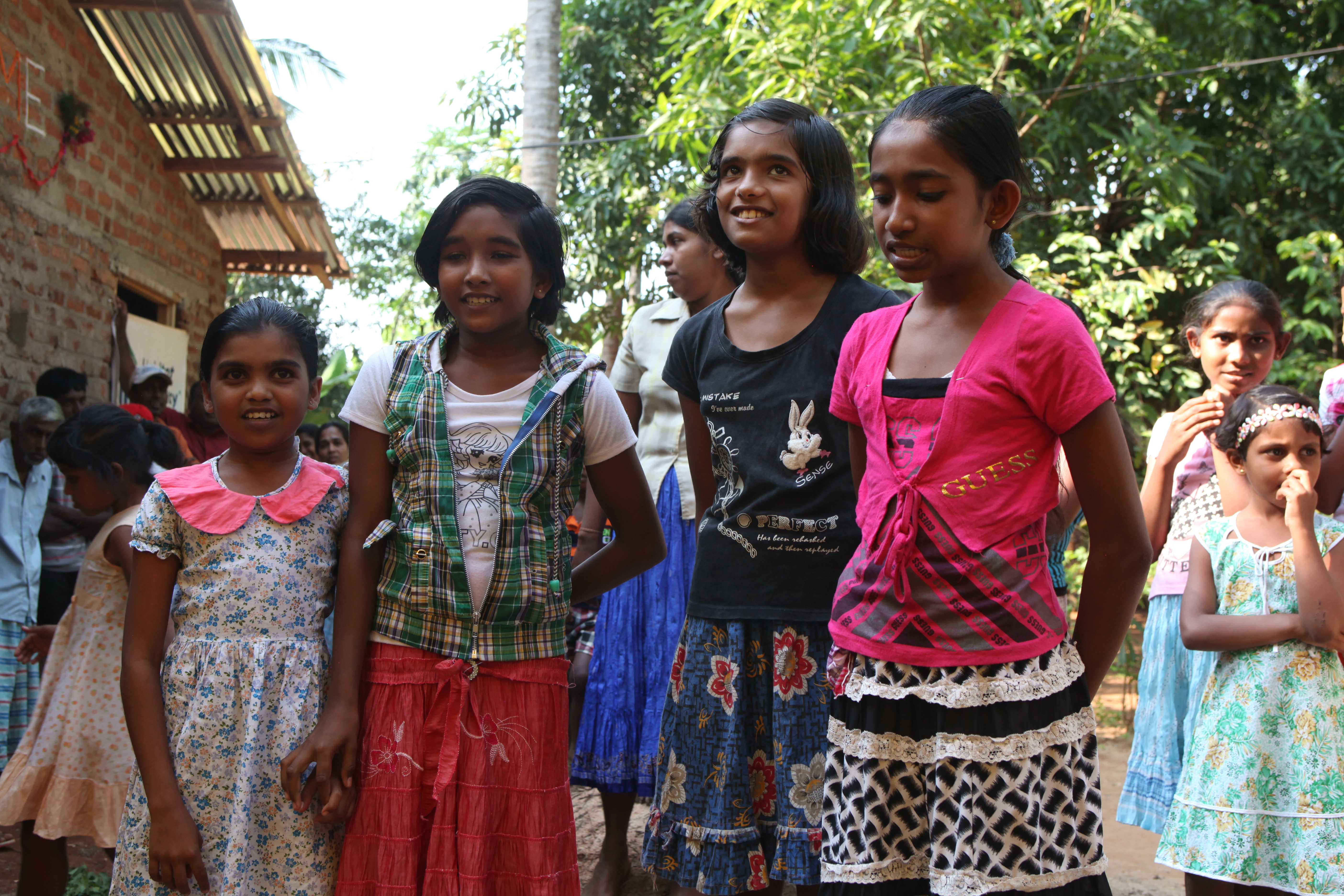
On the first day, we were met by a band of dancing children who led us under a palm canopy where we were presented with flower necklaces.
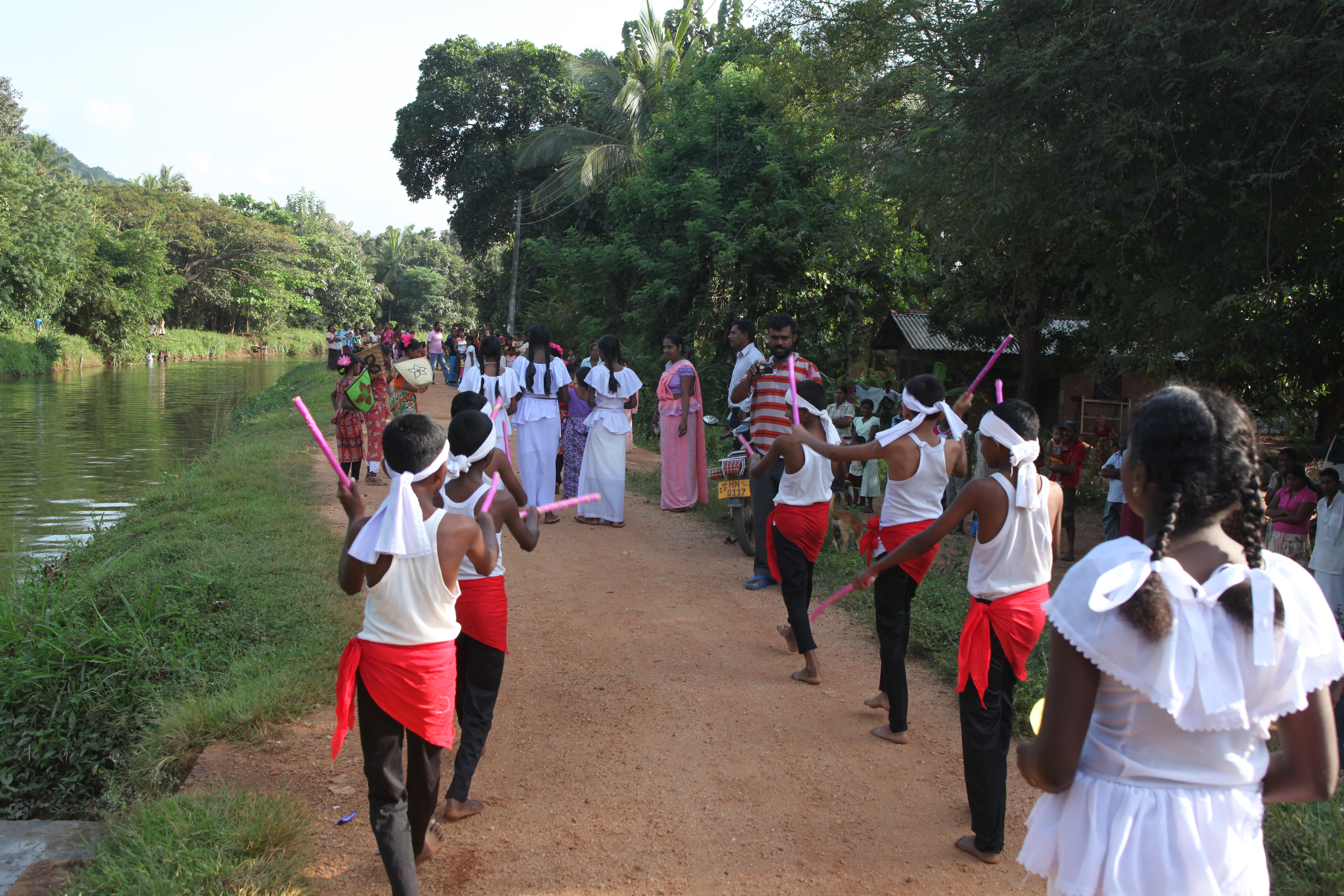
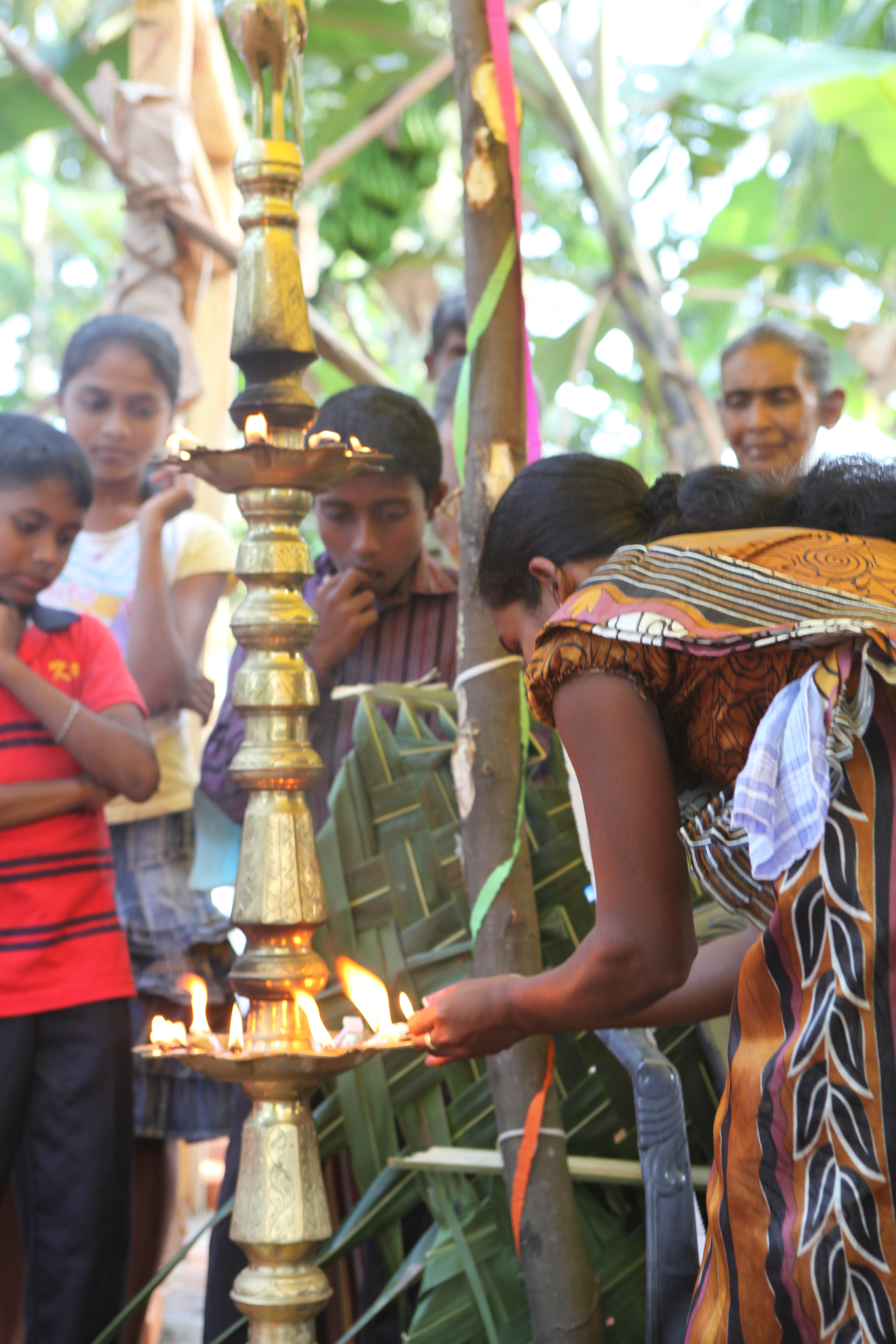
We gathered in a small clearing set up for the occasion and all the participating families, those with work to be done, made short statements. A candle-lighting ceremony followed that included everyone and there was much cheering and applause.
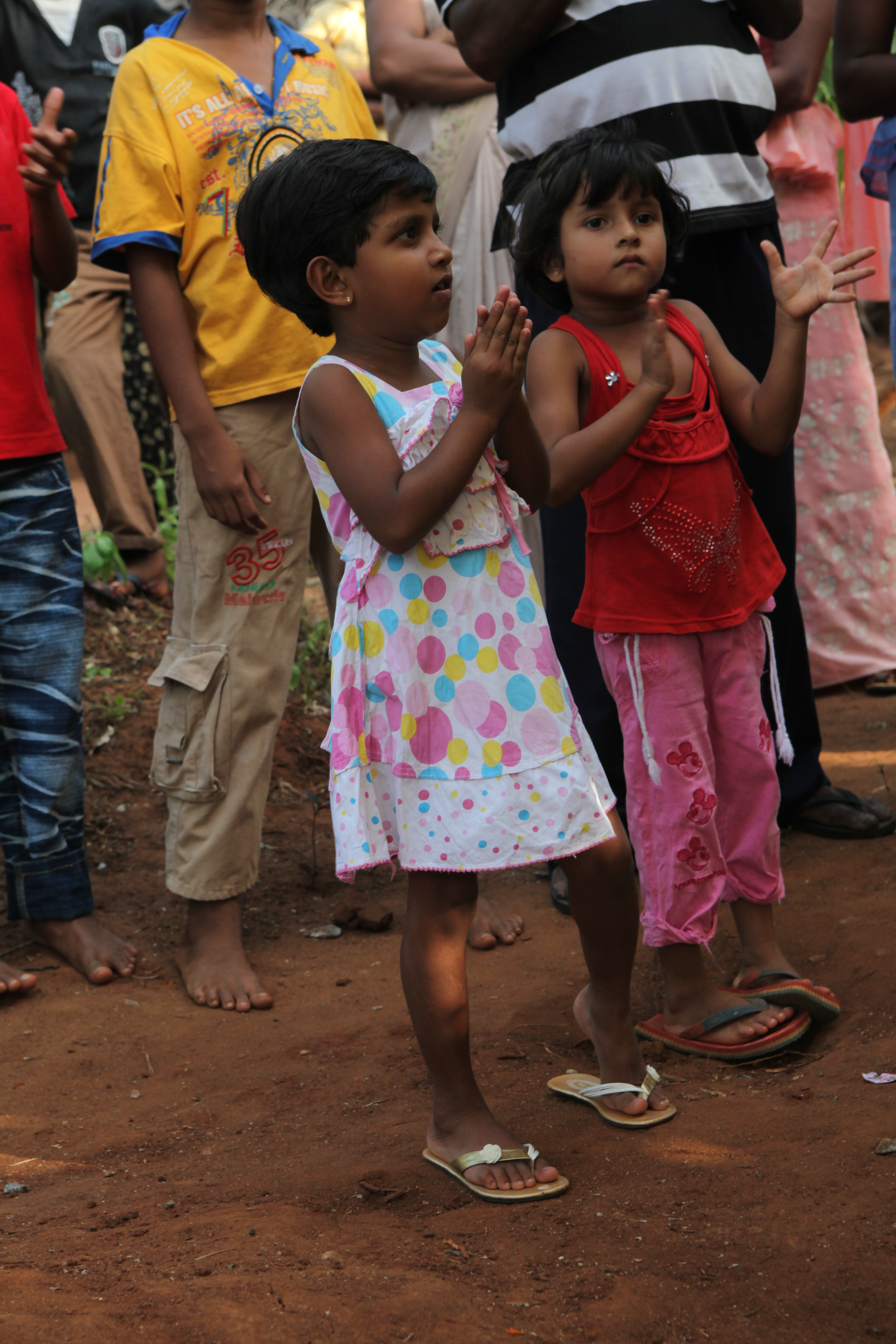
The village had us with that first parade. Ready to work and build.
There were twelve in the crew and multiple sites to work. The jobs varied from digging latrines to building from the ground up to adding rooms or finishing those already begun. One of the requirements of Habitat is that the owners must put in “sweat” work. (In Sri Lanka, that takes on a whole new meaning.) For eight days over two weeks, the crew worked alongside the villagers.
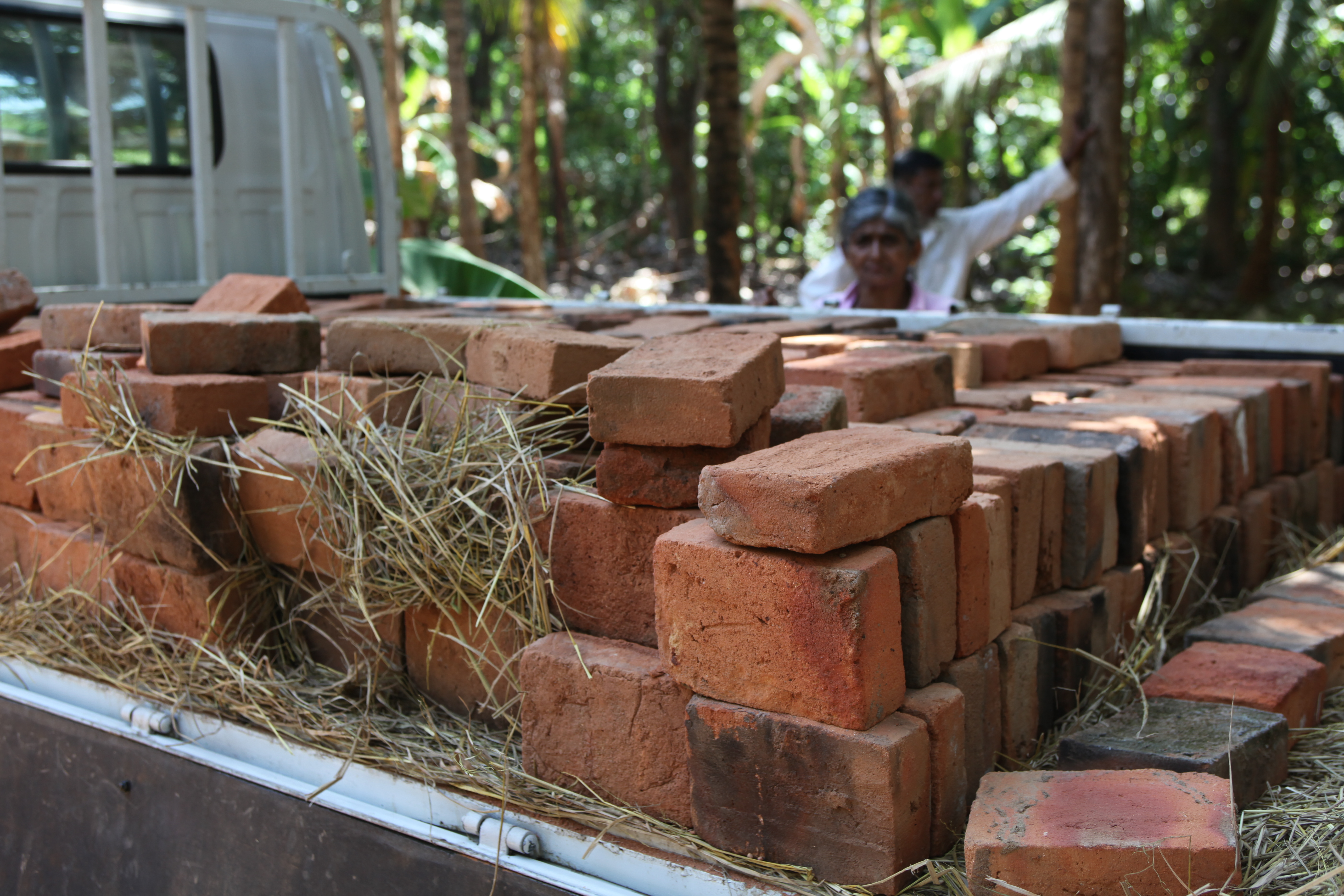
Building in Sri Lanka is nothing like building in the US. Brick is the primary material. Homemade, low-fired, large and heavy. Sand is gathered from the river for the mortar. The only commercial products were the bags of cement to be mixed with the sand and the door and window frames pre-made by one of the villagers. Scaffolding was made from sticks and boards tied with rope.
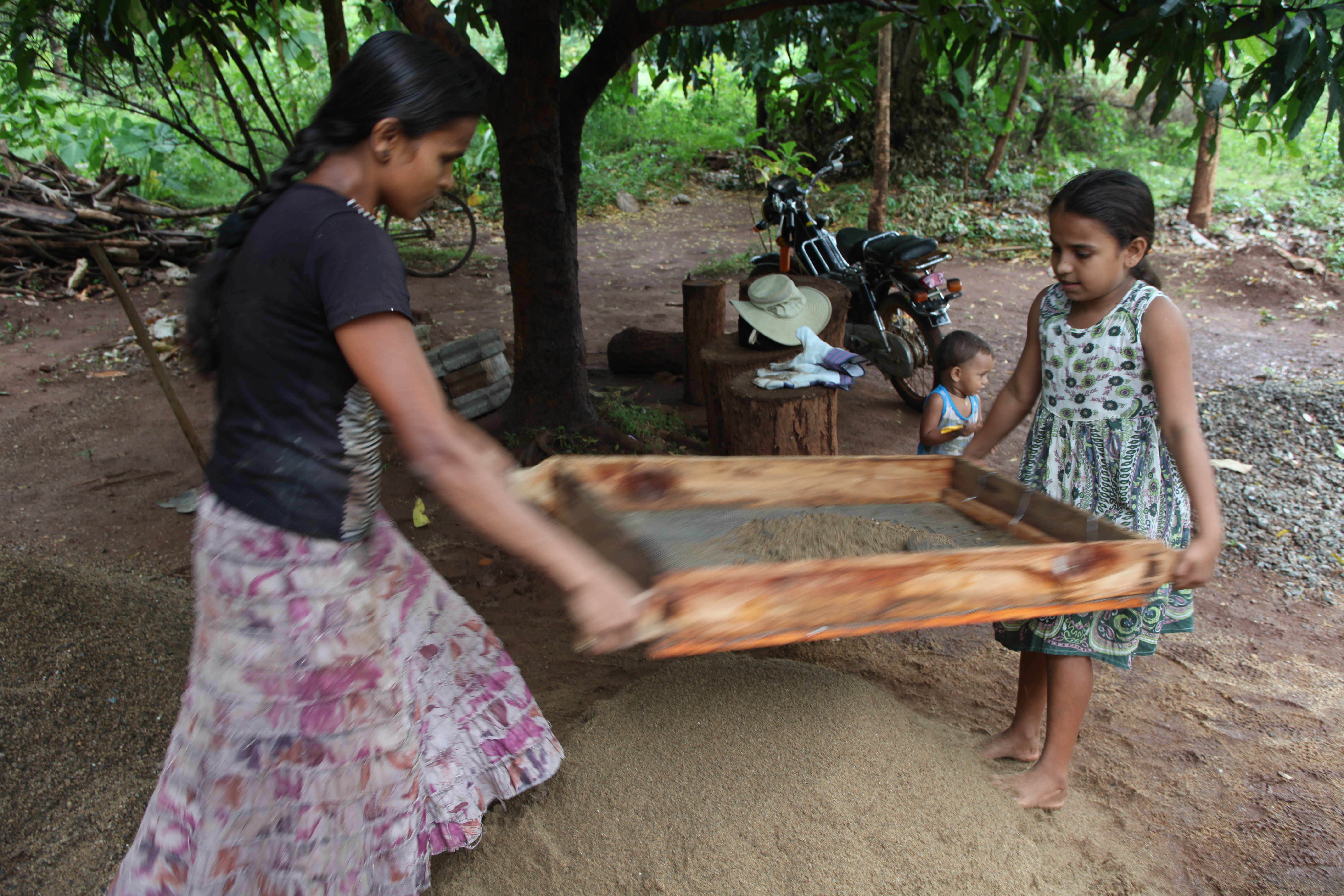 Sand was sifted by two people holding large frames with screening and shaking it back and forth. (My least favorite job but, then, I didn’t dig any latrines.) Levels to determine if the bricks were straight? Two sticks and a string. The floors were dirt and the inside walls unfinished—at least until the family could afford to add those final touches. But home.
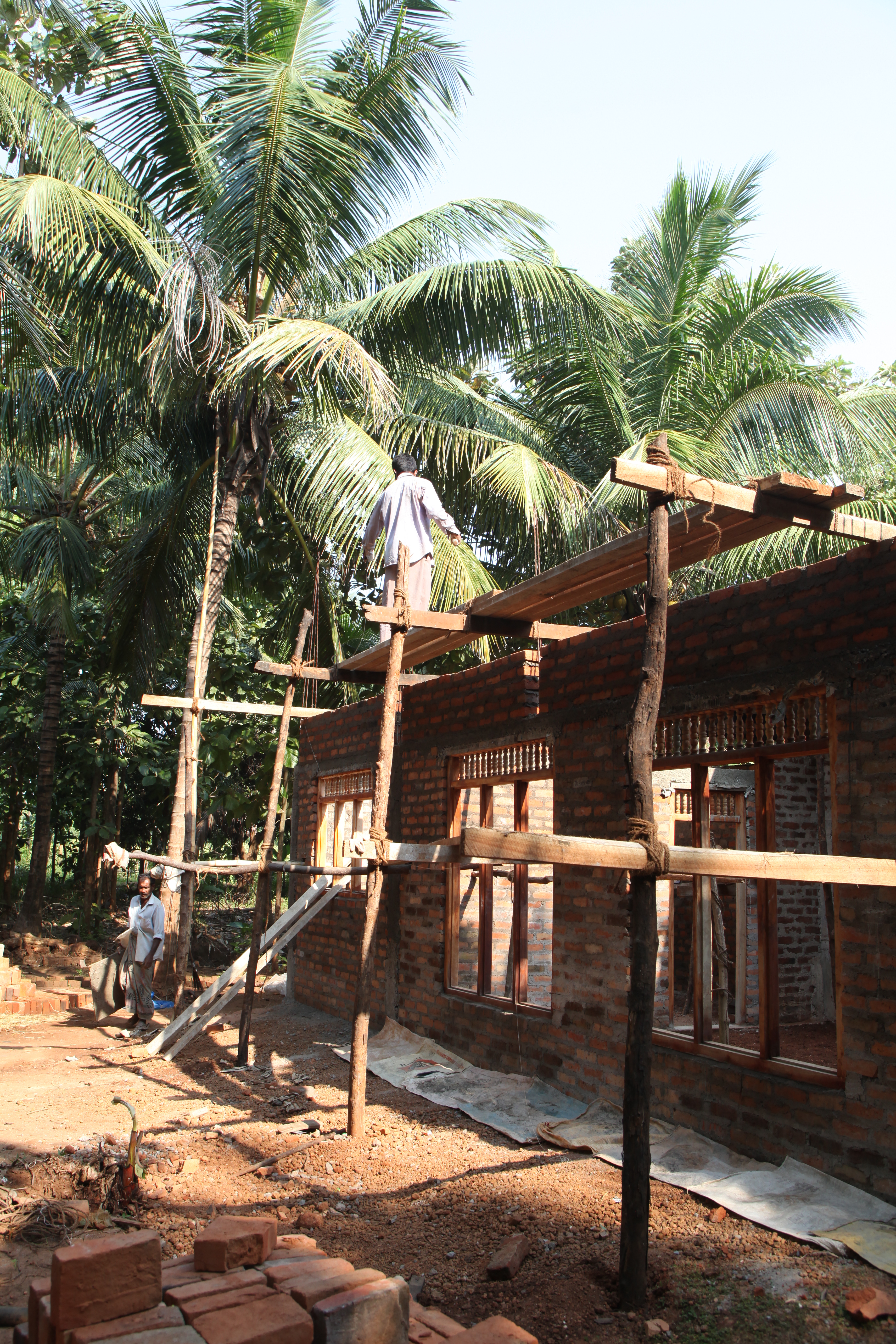 I settled, with two others, on the site adding an additional room. Heights are not my thing so no scaffolding for me. Instead, bricks became my charge. First, gather a wheelbarrow full of bricks from the stacks, wheel them to the oil drum full of water and load them into the drum to soak. Lift the soaked bricks from the drum back into the wheelbarrow and cart them to the bricklayer—from a neighboring village and he knew what he was doing. (This was a relief to us all, that we would not be responsible for leaning walls.) Hand them up for placement. Make sure there was plenty of mortar available. When that stack was done, start all over. Seven days. Hundreds of bricks. The walls went up and none came down.
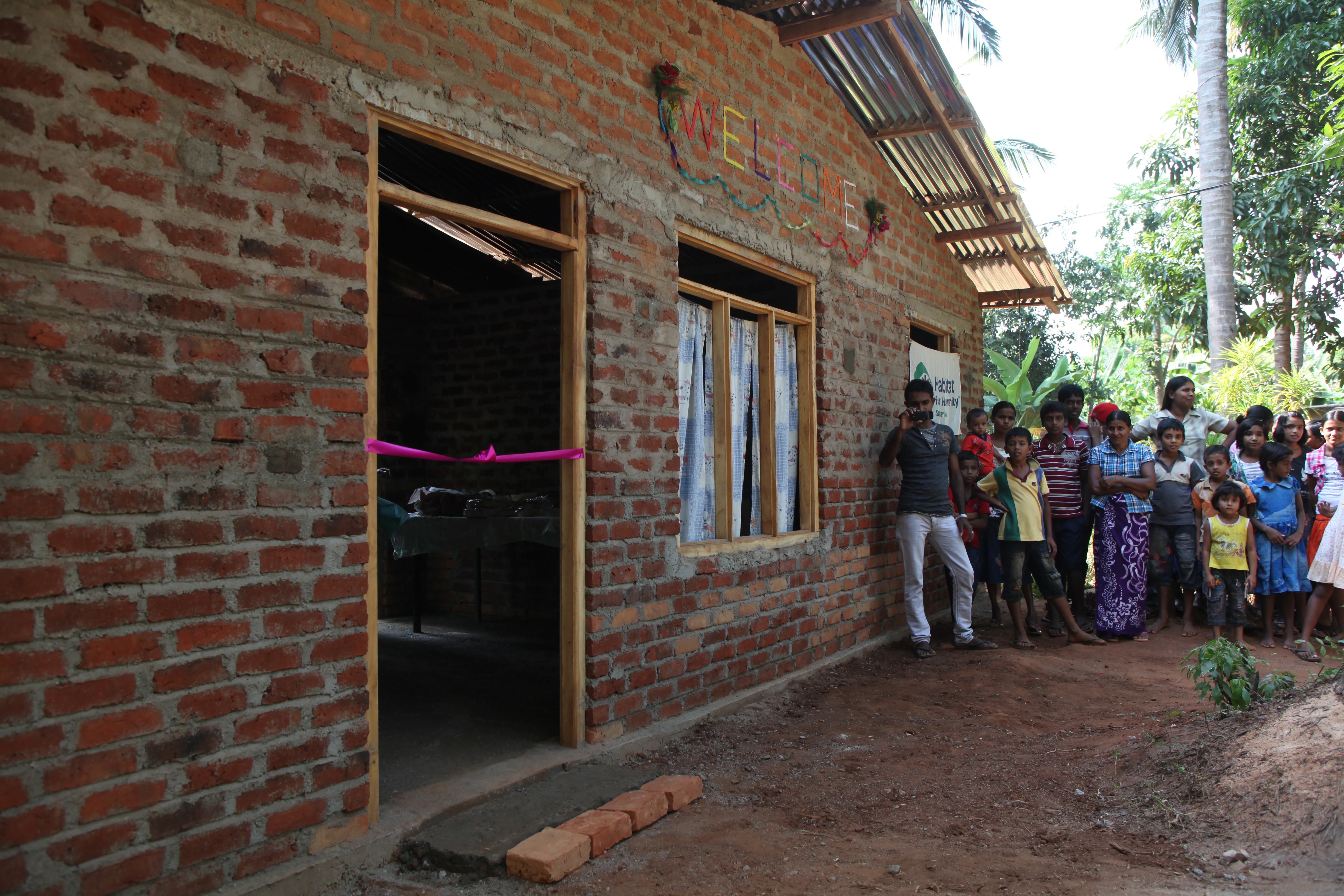
When the time came for us to leave, there was, yes, another ceremony. In the same clearing, but now there was a house.
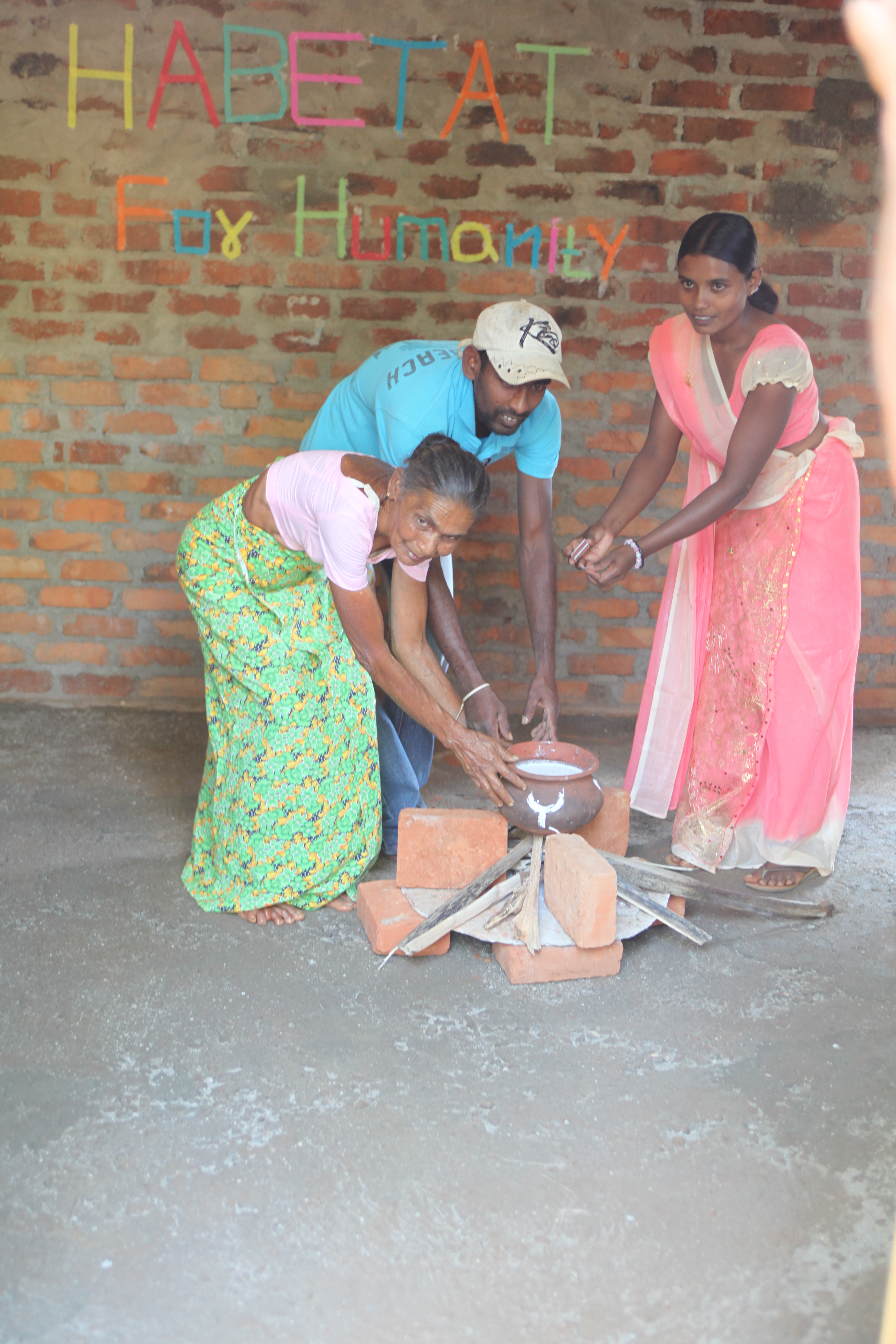
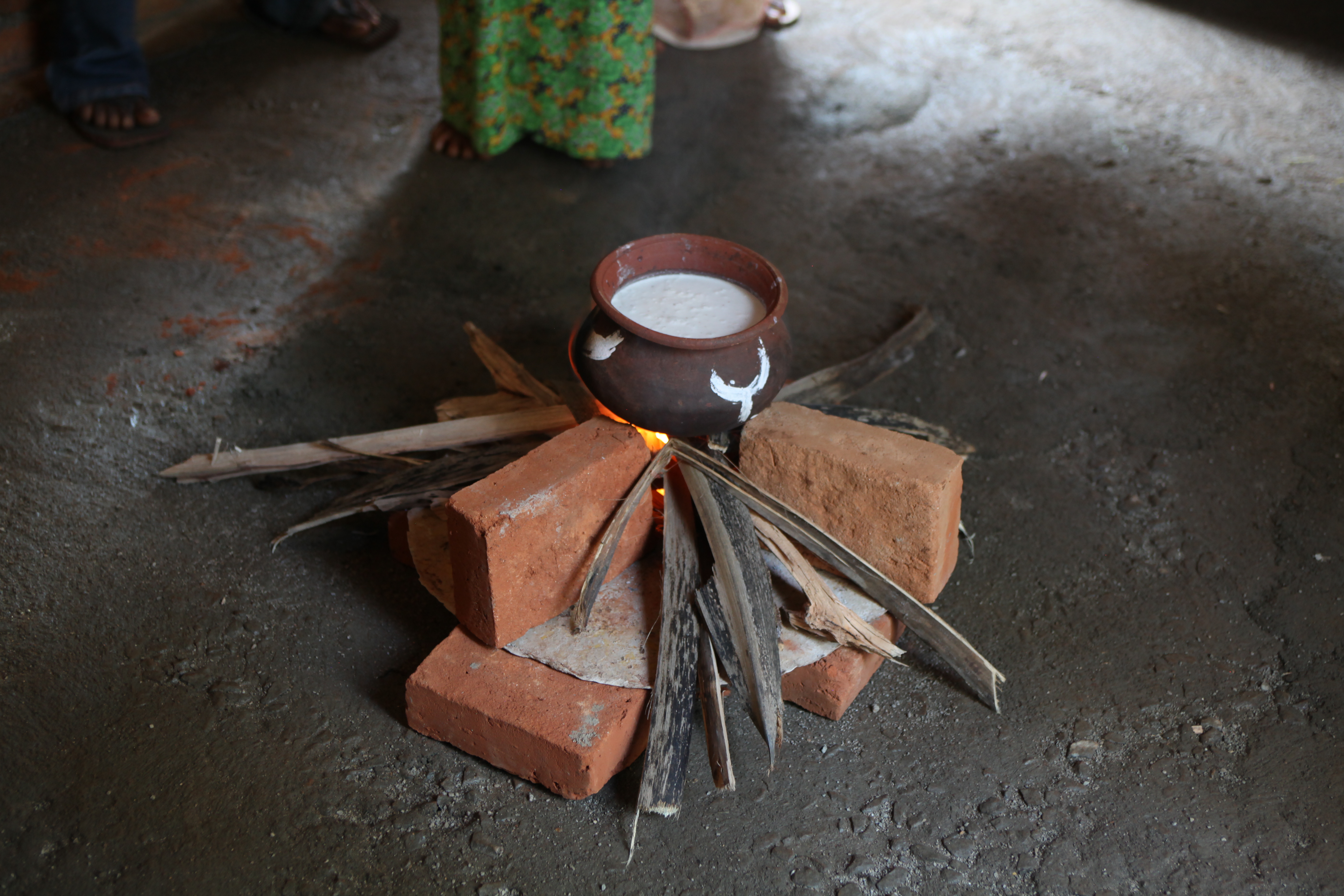
The house was blessed with the traditional overflowing of a pot of milk, delicious sweets were served, the children performed ending with a rousing rendition of “Itsy bitsy spider” courtesy of yours truly. (Only one of many stories but for a later blog.)
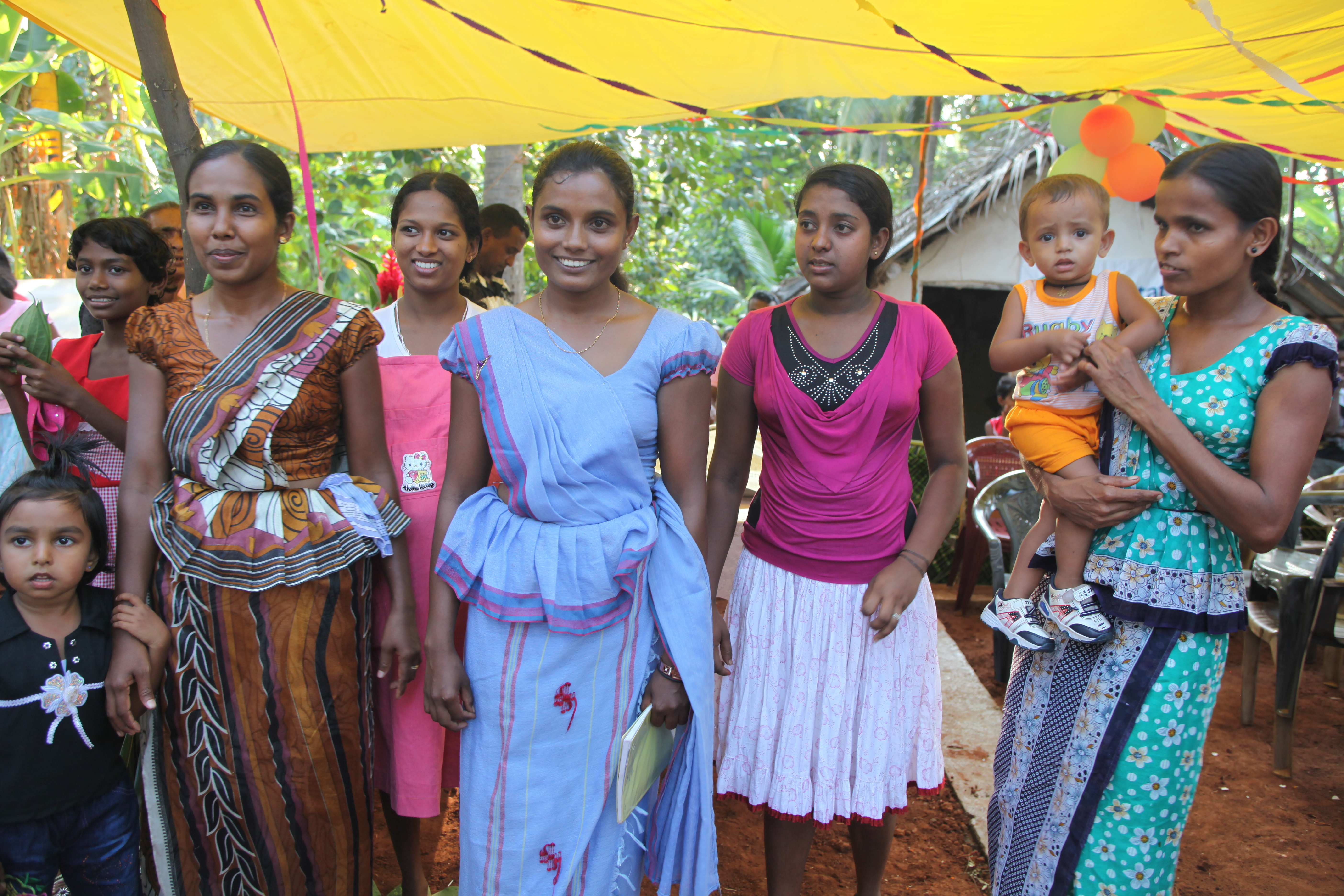
I thought the trip was about building houses. It was really about building bridges.


 ontheroadwithjp