 Just when you think another temple cannot be endured, there it is. Not like any other temple on any other trip. Maybe it’s the magic inside or made of an unexpected material, or hanging off a rock. Rarely does a written description do justice. Up close and in person is the only way.
The Hindus have complicated and intricate stories attached to their temples. The Buddhists love gold. Hindu temples have myriad gods, some the same god with different names or personalities. Called something different if they are angry or remorseful or playful–dancing, teaching, smiting with large swords. Cows wearing garlands or elephants in scarves stand in greeting at entrances. Intricate carvings adorn both the inside and, especially, the outside.
Buddhist temples are filled with golden images of Buddha. Standing Buddhas, reclining Buddhas, small and extremely large Buddhas. Reclining Buddhas that would fill a high school gymnasium. The preferred method of honoring is to place bits of gold-leaf on statues or, in the case of the Golden Rock, on a rock. Some have been honored so many times over the centuries that their earlier form is obliterated, become a rounded blob of gold-leaf. Multi-colored flags are a major display.
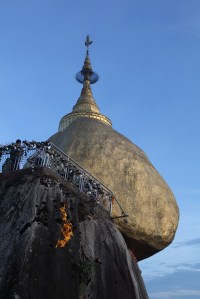
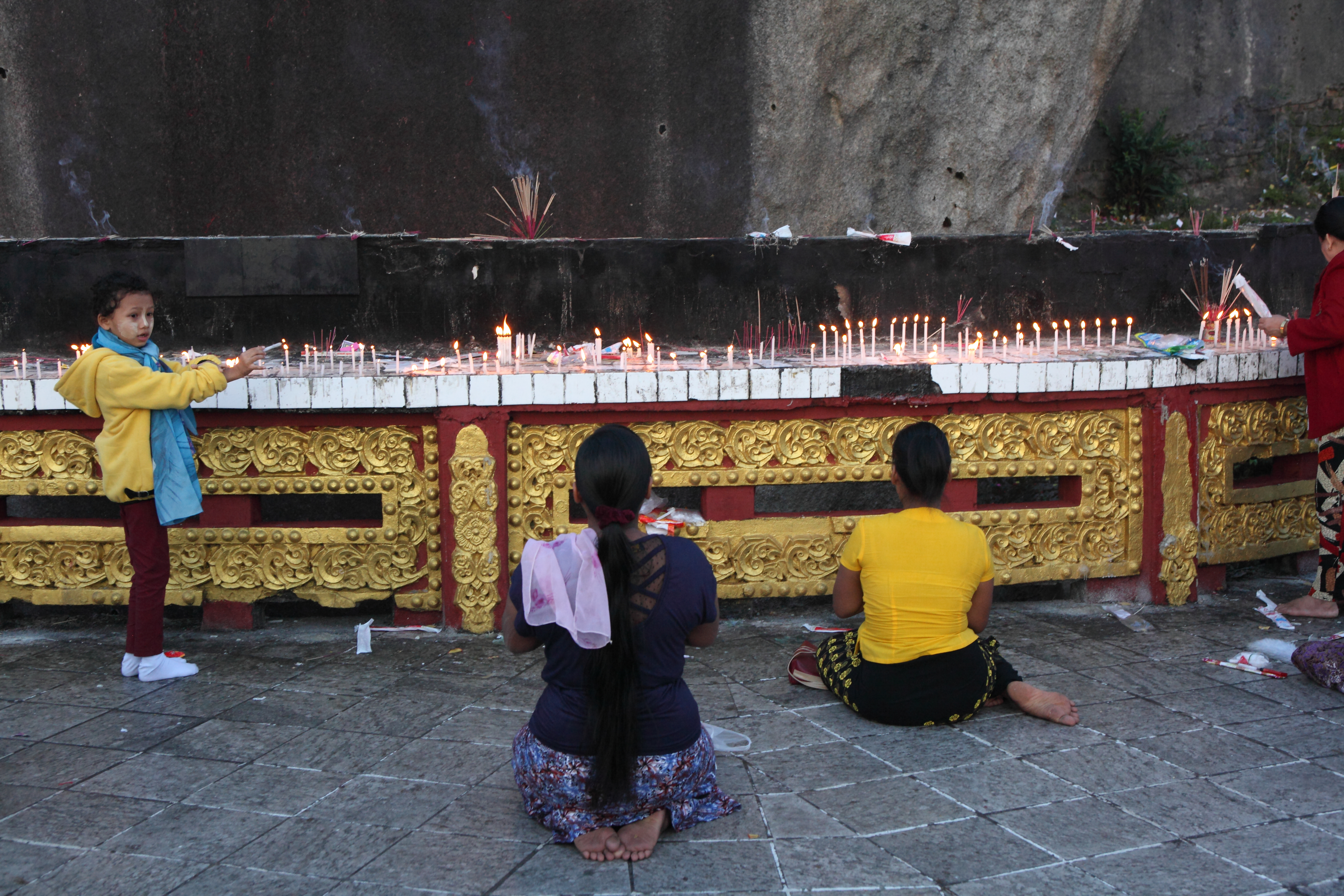
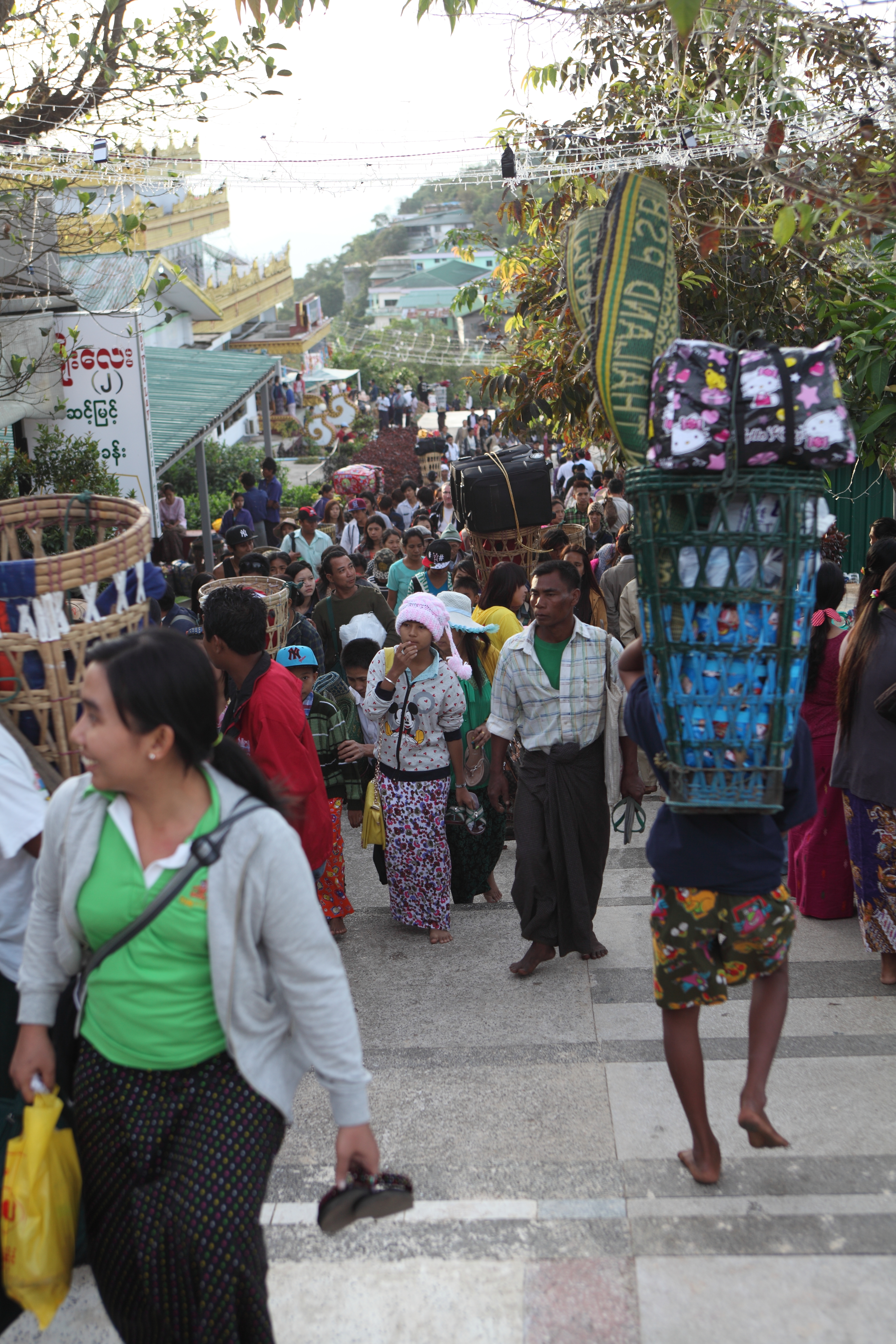
Four of my recent favorites are one in Myanmar and three in India, two Buddhist and two Hindu. In Myanmar, one might be tempted to skip the Golden Rock. It is highly touted and considered very “touristy.” It is. So what? The crowds are huge because it is a very holy place and the atmosphere is one of celebration, a festival, family reunion, a giant thanksgiving around an enormous, gold-leaf-encrusted balancing rock. The party goes on all night. Candle offerings and, in the morning, elaborate plates of fresh fruit and flowers bedeck the various prayer sites. People come with food and bedding. This is an all-nighter. The truly prepared bring tents.
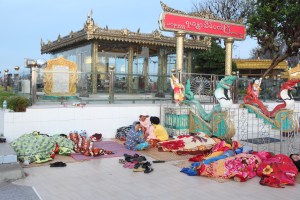
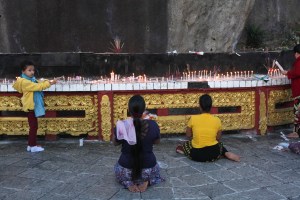
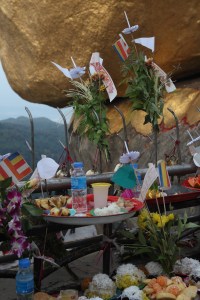
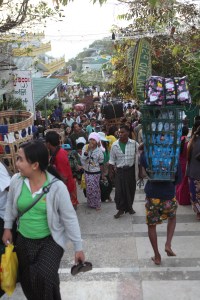
When the sun rises the packing up begins. People with baskets offer to carry goods down the hill for a fee. As the descent begins, there is an equally large crowd ascending for yet another night at the Rock. Go. Stay at the top so as to not miss the best parts–sunset and sunrise–and all the festivities in between.
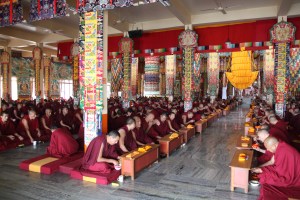
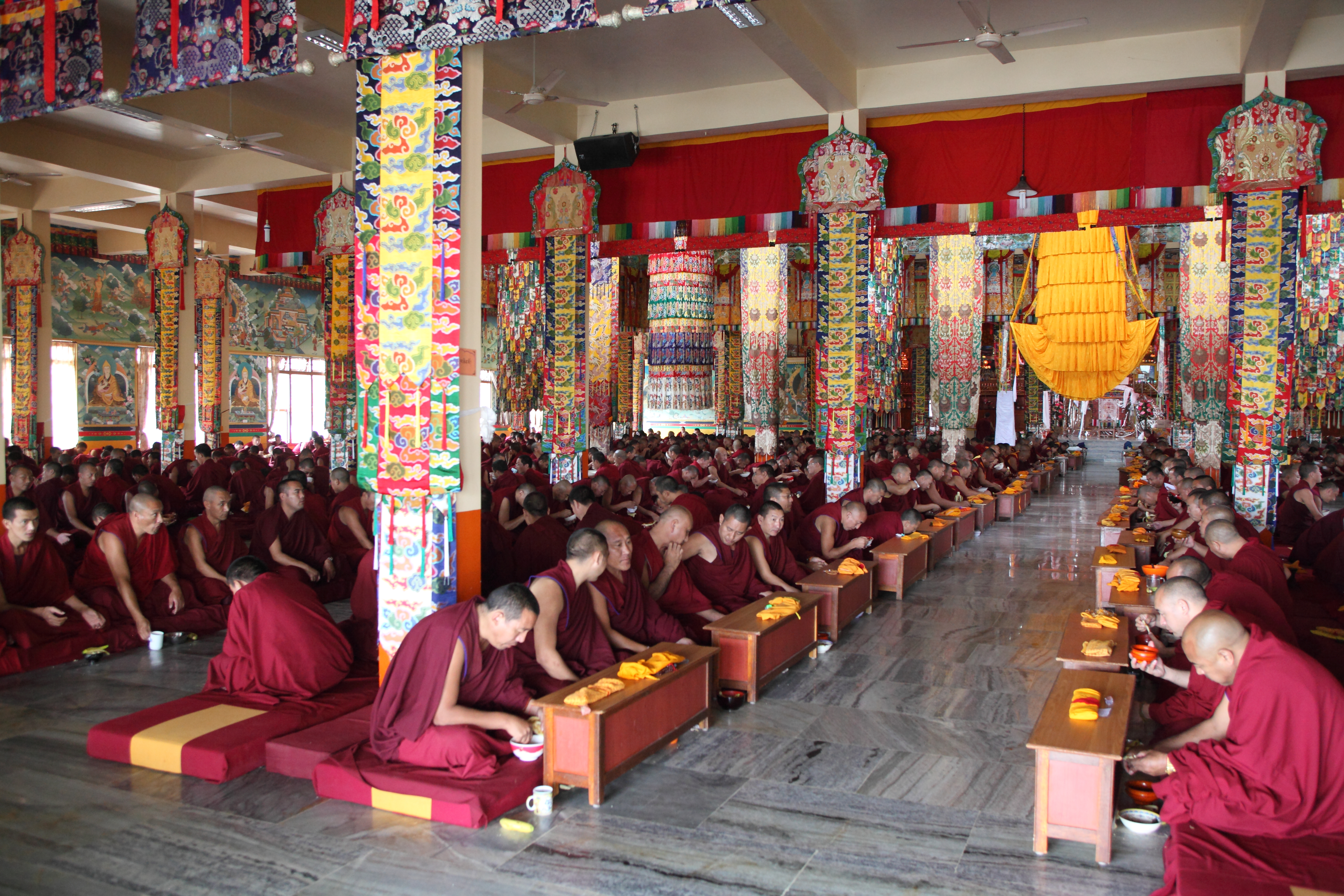
The other Buddhist site was Tibetan but in India. There is a territory in Karnataka state that was offered as shelter to Tibetan refugees. A humanitarian gesture after the 1959 exodus. Several communities have built up over the years with temples and monasteries. I was privileged to visit one of the monasteries, Sera Je, and the temple where lunch was being served to 500+ monks. The large space was filled to capacity, a vision of red, the monks’ robes and the hanging flags and banners, with the occasional yellow accent. Food and the sharing of food is an integral part of the religion along with chanting. An unforgettable memory, that sight of the filled temple vibrating first with the chanting then with the chatter of people sharing a meal.
The major Hindu temple in Madurai is the place to be for the closing evening ceremony of carrying the statue of Sundareshwarar to the bedchamber of Meenakshi. There is a long, complex story attached to this service but basically it is about getting Sundareshwarar’s consort, Meenakshi, from his temple to hers so they can spend the night together. This entails lengthy preparations and a remarkable procession. The guards are very strict upon entering the temple. Women and men are separated and patted down, my Kindle was examined cautiously and suspiciously until I showed the woman guard that it was a book. But the camera? Had to be checked along with the shoes. Cell phone? No problem. Camera-less, I was frustrated by all the tourists with cell phones and iPads taking photos. The tour leader informed us that cell phone photos were fine. What, this has nothing to do with not allowing photographs, just no obvious cameras? Peculiar but I took him at his word and managed a few shots–until I saw the large sign with the drawing of a cell phone with a big X on it.
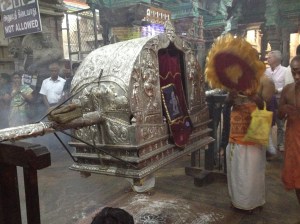
Nick of time photo, this. When visiting this temple, best to enter with the now strange idea of just watching something, engaging with it, letting oneself get involved with what is actually happening. You will like the experience.
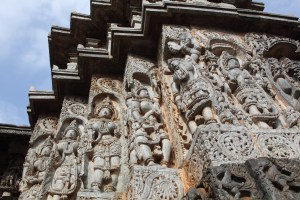
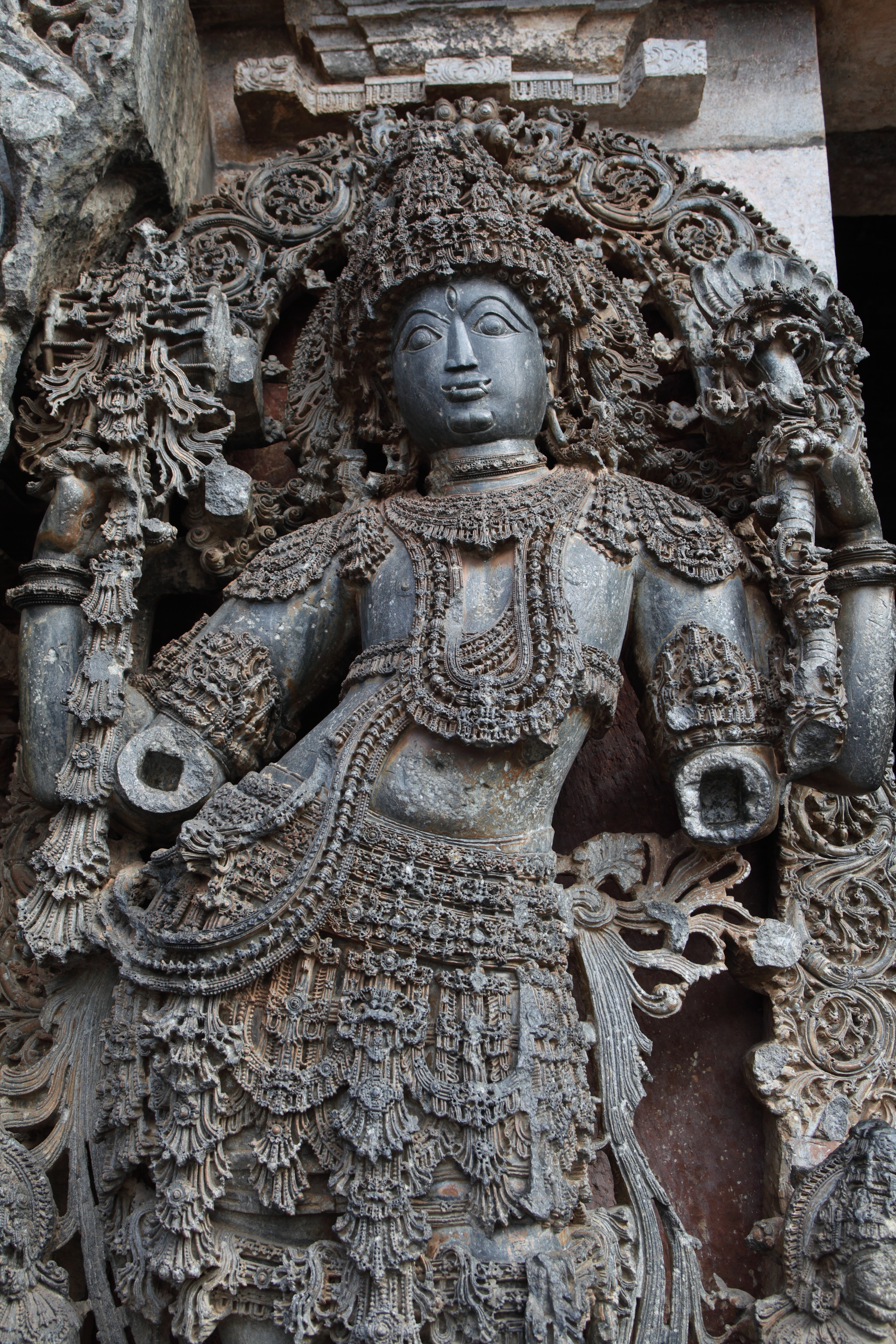
In Hassan there is an 11th century temple carved from soapstone. Most temples have granite bases and the detailed work is made from sandstone or molded and plastered brick. Forms frequently painted, every twelve to fifteen years according to Hindu cycles of refurbishing or rebirth. This entire temple is carved soapstone. There is no painting. Pillars have been spun on their sides and carved as one would a tree on a lathe. The detail on all the figures is remarkable, down to the individual beads on a necklace. The carvings all tell a story.
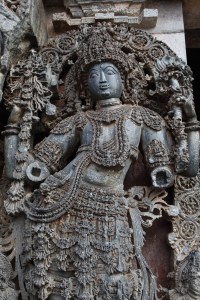
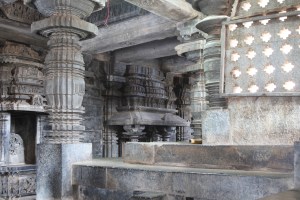
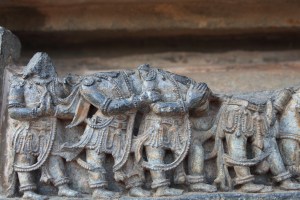
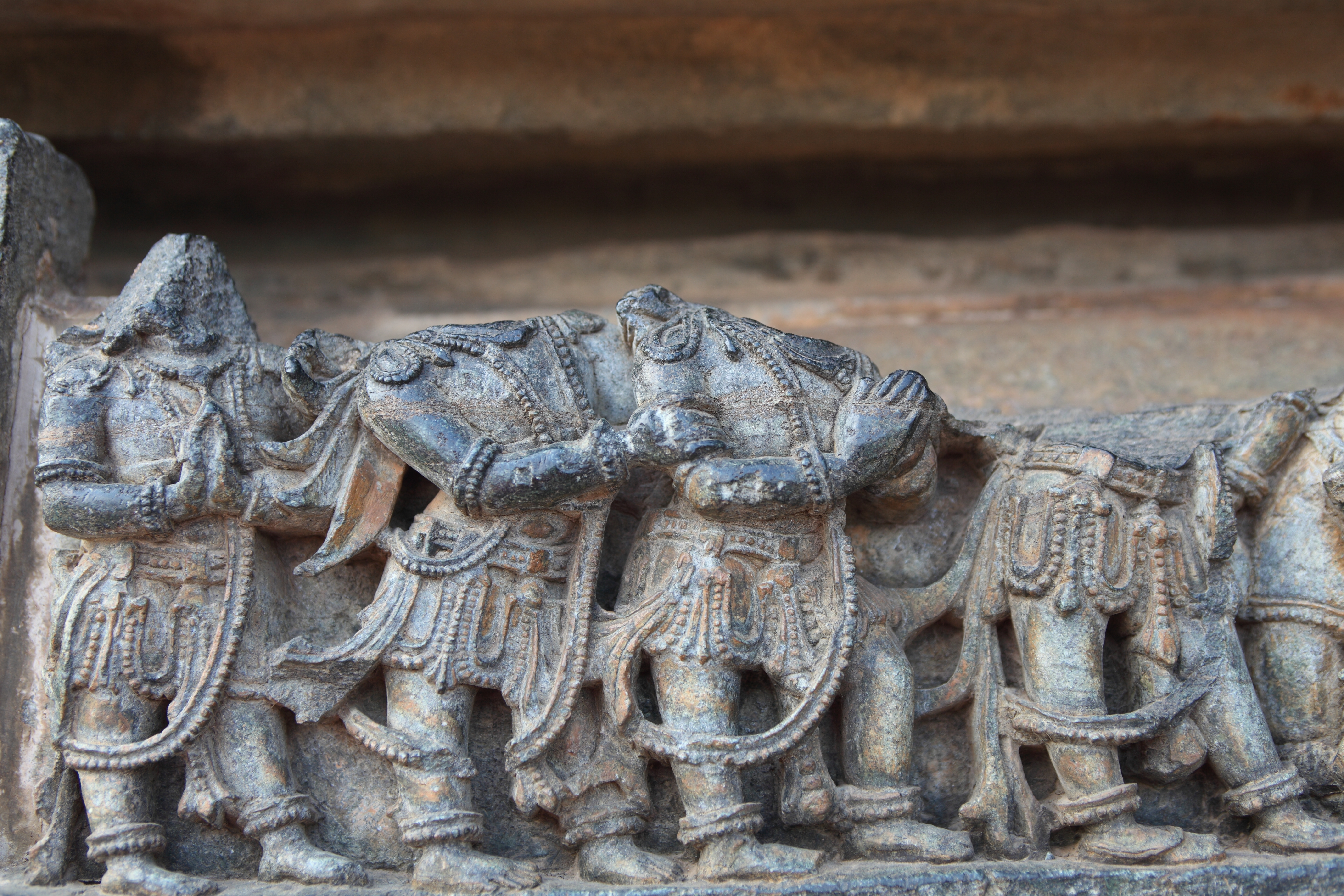
Some of the soldiers lost their heads when the Moguls invaded which is another, unintended story. Fortunately, they appear to have tired of the destruction and left most intact. I’m still wrestling with the idea of a 37 meter (121 foot) high temple carved from soapstone, a soft, easily carved material generally used for small statues, maybe even large, but not temple-sized. How has it survived for more than a thousand years?
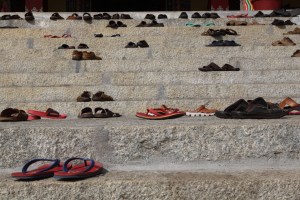
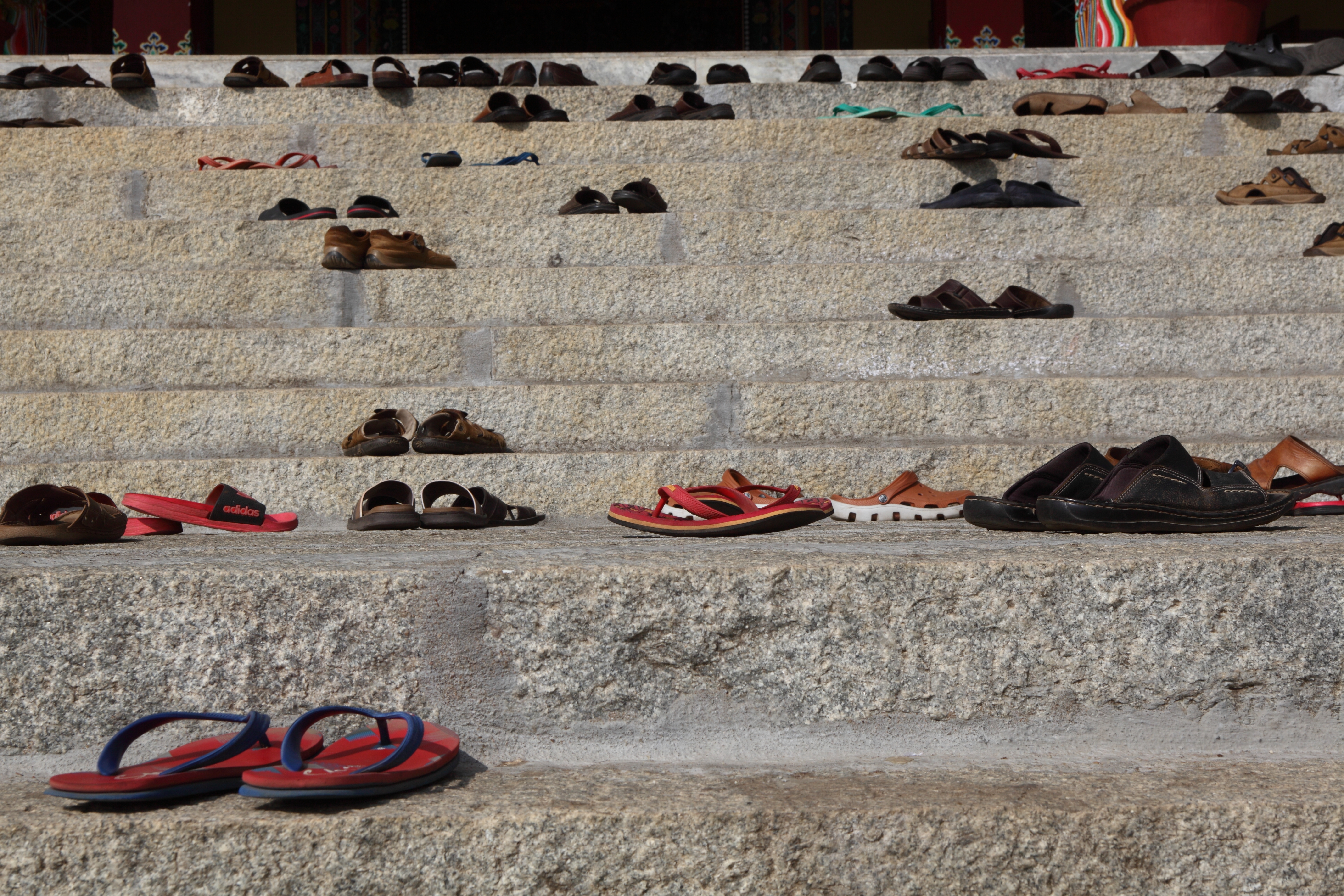
When you are traveling through Buddhist and Hindu countries, my advice, don’t write off yet another temple until you’ve taken a close look, peeked inside, waited for the next ceremony. Look for the shoes. If there is a large collection outside, you can be certain something big is going on inside. Step in. You might be surprised.
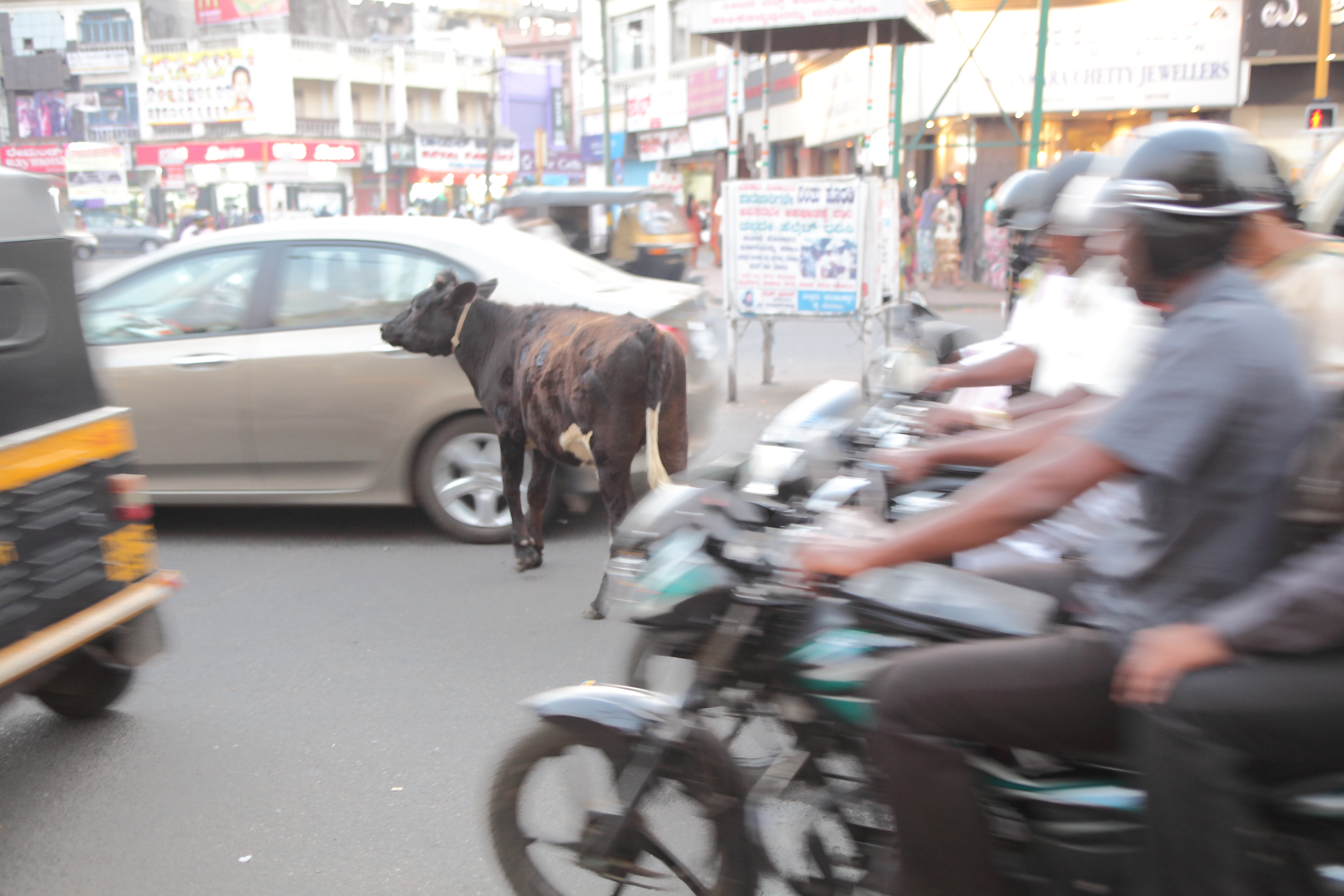
 Seeing a cow (and I use that as a generic term for bovines, male and female) making its way through traffic is a startling sight. Perhaps not so startling to Indians who see this every day, but to me not a customary sight and I continue to find it bizarre and interesting. So, I follow cows looking for the perfect photo opportunity. By now, I should know that the opportunity rarely arises while following the cow. Rather, when they sneak up on you or are spotted in a doorway or fighting the motorbikes.
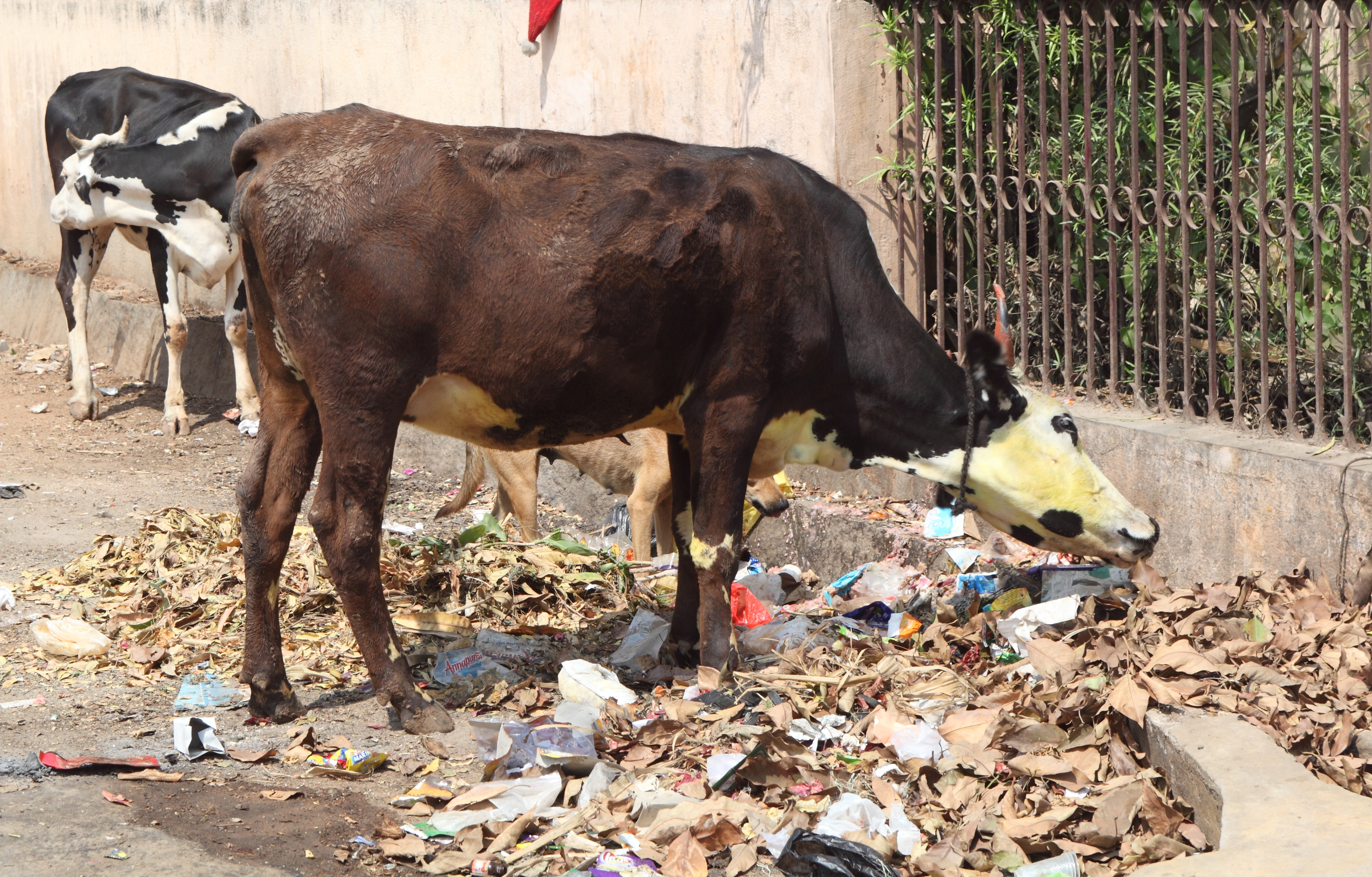
 Life is not always good for the cow in India. The city cows scavenge for their food and tend toward the scrawny. The country ones may get food, but labor long hours and carry heavy loads. Some of the cows have owners, others fend for themselves. One is hardly distinguishable from the other except, perhaps, those with owners have a place to go at night. Mostly, they just plop down wherever they are and traffic, foot and car, goes around them. It gives new meaning to the term “free range.”
 Would it be better to be a cow in Switzerland, where cows roam the hillsides in the incredibly fresh air nibbling the grass and with a place to go at night? Maybe. Then again, the Swiss eat beef.





 ontheroadwithjp